
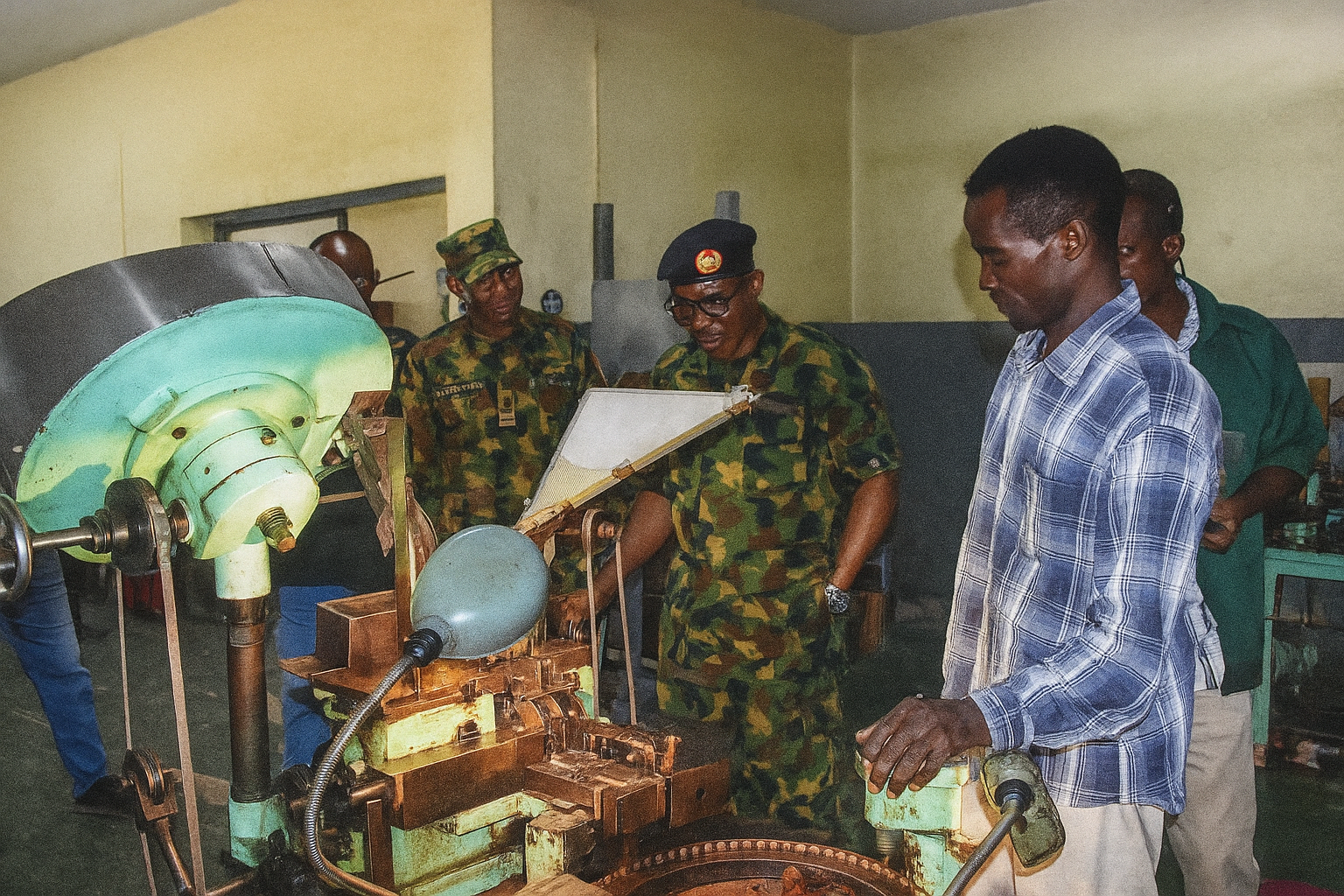
In less than two decades, Turkey has transformed from a near-total defence importer into one of the world’s top 15 arms exporters. Once reliant on foreign suppliers for nearly 80 percent of its military equipment, Ankara now produces drones, armoured vehicles, missiles, and warships that rival European standards. Behind this transformation lies a disciplined policy framework, a coordinated industrial base, and political will — three lessons Nigeria can no longer afford to ignore.

Turkey’s modernisation began in 2004 when President Recep Tayyip Erdoğan’s government launched the Defence Industry Agency (SSB) — a civilian body tasked with coordinating all military procurement, local manufacturing, and technology transfer. The agency’s role was simple: consolidate fragmented industrial efforts under one authority and reinvest procurement funds into local capacity. By 2023, Turkey was producing over 75 percent of its defence needs domestically, led by flagship firms like Baykar, Aselsan, Roketsan, and Otokar.

This success did not happen overnight. Ankara combined state-led strategy with private-sector entrepreneurship, creating a hybrid ecosystem where innovation thrived under protectionist procurement laws. Domestic firms were given preferential access to contracts, long-term funding through the Defence Industry Support Fund, and guaranteed export promotion via defence diplomacy. Today, Turkey exports drones to 30 countries and ships naval platforms to Asia, Africa, and Latin America — including Nigeria.
For Abuja, the parallels are striking. Nigeria’s Defence Industries Corporation of Nigeria (DICON) Act 2023provides a similar legal foundation, establishing the Defence Industry Technology, Research, and Development Institute (DITRDI) and encouraging public–private partnerships. Like Turkey in the early 2000s, Nigeria is at an inflection point: a young defence ecosystem, emerging private players such as Proforce Limited and Halogen Group, and an urgent need to localise production.

However, Turkey’s journey underscores that legislation alone is not enough. What made the difference was consistent political commitment and strategic coherence — the same agency managing procurement also directed R&D and exports. In contrast, Nigeria’s system remains decentralised: the Ministry of Defence, DICON, NASENI, and service branches often operate in silos. Without harmonised planning and dedicated funding, industrial policy risks dilution.
Another critical lesson is Turkey’s emphasis on defence exports as economic policy, not just military strength. Its products are marketed through embassies, trade fairs, and state-backed financing. Nigeria’s potential in West Africa is enormous: peacekeeping missions, counterterrorism operations, and ECOWAS logistics create a captive market for light weapons, armoured vehicles, and drones. A coordinated export strategy could turn Nigeria into the subregion’s arsenal — much like Turkey became for Central Asia and the Middle East.

Finally, Turkey’s success relied on human capital and R&D. Universities and defence firms collaborated on robotics, materials science, and electronic warfare — fields that took root through continuous investment. Nigeria’s AFIT, NASENI, and DITRDI could replicate this model by linking academic research with industrial prototypes.

The overarching message from Ankara’s experience is clear: industrial sovereignty begins with institutional discipline. Turkey succeeded because it aligned political goals with technological ambition — a partnership Nigeria must now forge between its armed forces, academia, and private industry. If the lessons of Ankara are adapted with local pragmatism, Nigeria’s 2030 defence vision could shift from aspiration to action
Majemite Jaboro — Defence Watch Africa | Strategic Horizons



Leave a Reply