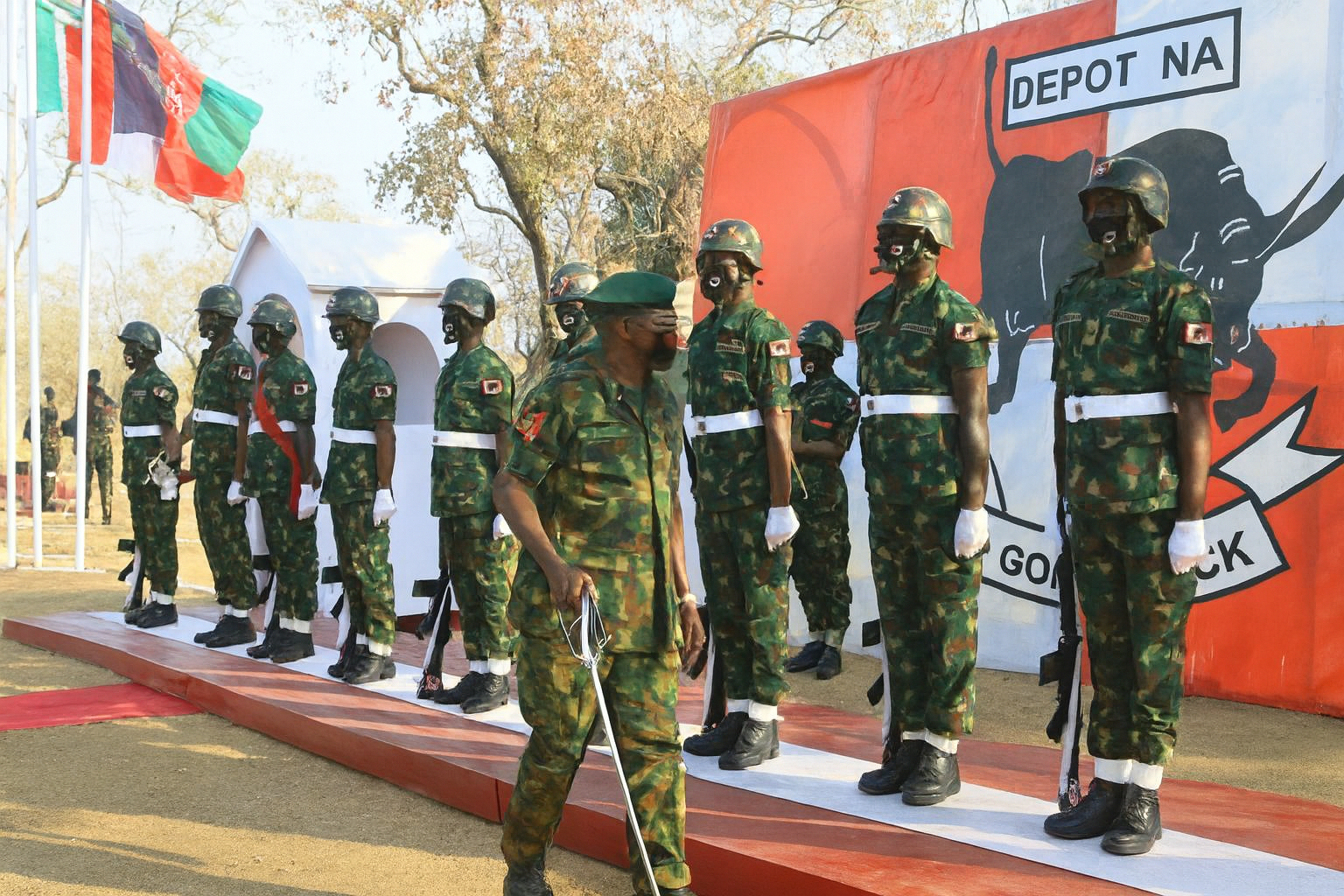
The Senate’s call for President Bola Tinubu to recruit at least 100,000 additional military personnel marks one of the most dramatic manpower proposals since the height of the Boko Haram war. The catalyst was the abduction of 25 female students from Government Girls Comprehensive Secondary School in Maga, Kebbi State—another brutal reminder that mass kidnappings have now spread from Borno to Zamfara, Katsina, Kaduna, Niger, Plateau, and now deep into the North-West.
But the bigger question is: Is manpower alone the answer?
The short, strategic answer: Partly—but not in the way the Senate imagines.
1. Nigeria’s Security Crisis Has Outgrown Its Force Structure
Nigeria today faces three simultaneous insurgencies, plus a nationwide banditry crisis:
-
Boko Haram and ISWAP (North East / Lake Chad)
-
Fulani bandit networks (North West / North Central)
-
IPOB-ESN insurgency (South East)
-
Oil theft syndicates and piracy remnants (South South)
-
Urban terrorism/kidnapping rings (South West and Abuja)
The total active-duty strength of the Nigerian Armed Forces is estimated between 223,000 and 240,000 personnel, far below what is needed for a country of 226 million people with internal conflicts across 27+ states.
For comparison:
-
Egypt, with a much smaller landmass, maintains over 450,000 troops.
-
Pakistan, facing a similar insurgency environment, fields 650,000 troops.
-
Ethiopia, with a similar population, fields 250,000–300,000 even after civil war losses.
Nigeria is under-manned for the size of its territory, population, and threat profile.
So, yes, manpower is part of the answer — but only part.

2. Why Mass Recruitment Alone Will Not Solve the Problem
Counter-insurgency is not simply a numbers game. Nigeria’s problem is not only insufficient boots, but insufficient capability, insufficient integration, and insufficient intelligence dominance.
A. The Army Is Already Overstretched
Troops are deployed to:
-
36 states and Abuja
-
17 major internal operations
-
Border security
-
Election duties
-
Anti-bandit joint task forces
-
Lake Chad MNJTF integration
-
Counter-ESN forest operations
-
Oil pipeline protection
They are fighting too many wars simultaneously.
B. Training Pipelines Cannot Absorb 100,000 Men Overnight
Nigeria’s training institutions—Depot NA (Zaria), NDA (Kaduna), Jaji, Kachia, Wukari, and various corps schools—are already at capacity.
Recruiting 100,000 troops without expanding training infrastructure creates:
-
undertrained personnel
-
unit cohesion breakdown
-
high casualty rates
-
logistical overload
This would replicate the disastrous 2014-2015 pattern where rushed recruits were deployed against Boko Haram with inadequate preparation.
C. Manpower Without Technology Won’t Defeat Insurgents
Nigeria’s adversaries are:
-
mobile
-
networked
-
familiar with terrain
-
supported by local intelligence webs
-
operating across borders
The Nigerian state still lacks:
-
persistent ISR drones
-
counter-IED capability
-
night fighting dominance
-
real-time multi-service fusion centres
-
enough armoured mobility
Manpower without technology, airpower, and intelligence fusion is just mass, not force.

3. What Nigeria Actually Needs: A Three-Level Manpower Reform
LEVEL 1 — Expanded Armed Forces (80,000–100,000 new troops over 5–7 years)
Not overnight. Not political recruitment.
Nigeria needs structured expansion:
-
50,000 Army
-
20,000 Air Force
-
10,000 Navy (riverine, coastal, Lake Chad)
-
10,000 Defence Intelligence and Special Forces
This must be accompanied by new:
-
training bases
-
riverine schools
-
special operations brigades
-
drone wings
-
counter-terror battalions
LEVEL 2 — A New National Gendarmerie
Nigeria needs a middle force between police and army — a heavily armed, mobile force for:
-
forest insurgencies
-
rural banditry
-
border control
-
highways
-
rail corridors
Senegal, France, Italy, Turkey, India all use this model successfully.
LEVEL 3 — Localized Security Auxiliaries with State Oversight
The vigilante architecture (Yan Sakai, Amotekun, Ebube Agu, Hisbah, neighbourhood watches) must be formalised, trained, and placed under unified command. Not militias but regulated auxiliaries.
4. Why the Senate’s Call Matters, Despite Limitations
The Senate’s resolution is politically significant because it acknowledges what the executive has avoided saying publicly:
Nigeria’s force posture is inadequate for its threat environment.
The abduction of 25 students in Kebbi is not merely an isolated failure — it is a symptom of chronic under-capacity. Rural communities in the North-West live under bandit micro-governments. The North-East remains a multi-actor insurgent battlefield. The South-East sees weekly assassinations. The South-South fights oil theft cartels larger than some African armies.
Nigeria is fighting 20th-century wars with 19th-century manpower levels and 21st-century threats.
Conclusion: Manpower Is Necessary — But Not Enough
Yes — Nigeria needs more troops.
But numbers without structure, reform, technology, and intelligence will simply produce a larger, exhausted, under-equipped force.
The Kebbi schoolgirls kidnapping is a warning:
If Nigeria does not expand, modernise, and technologically transform its security architecture, the insurgent and bandit groups will continue to exploit gaps faster than the state can respond.
Manpower is part of the answer — but the real answer is manpower + doctrine + technology + governance.
Majemite Jaboro writes for DWA


Leave a Reply