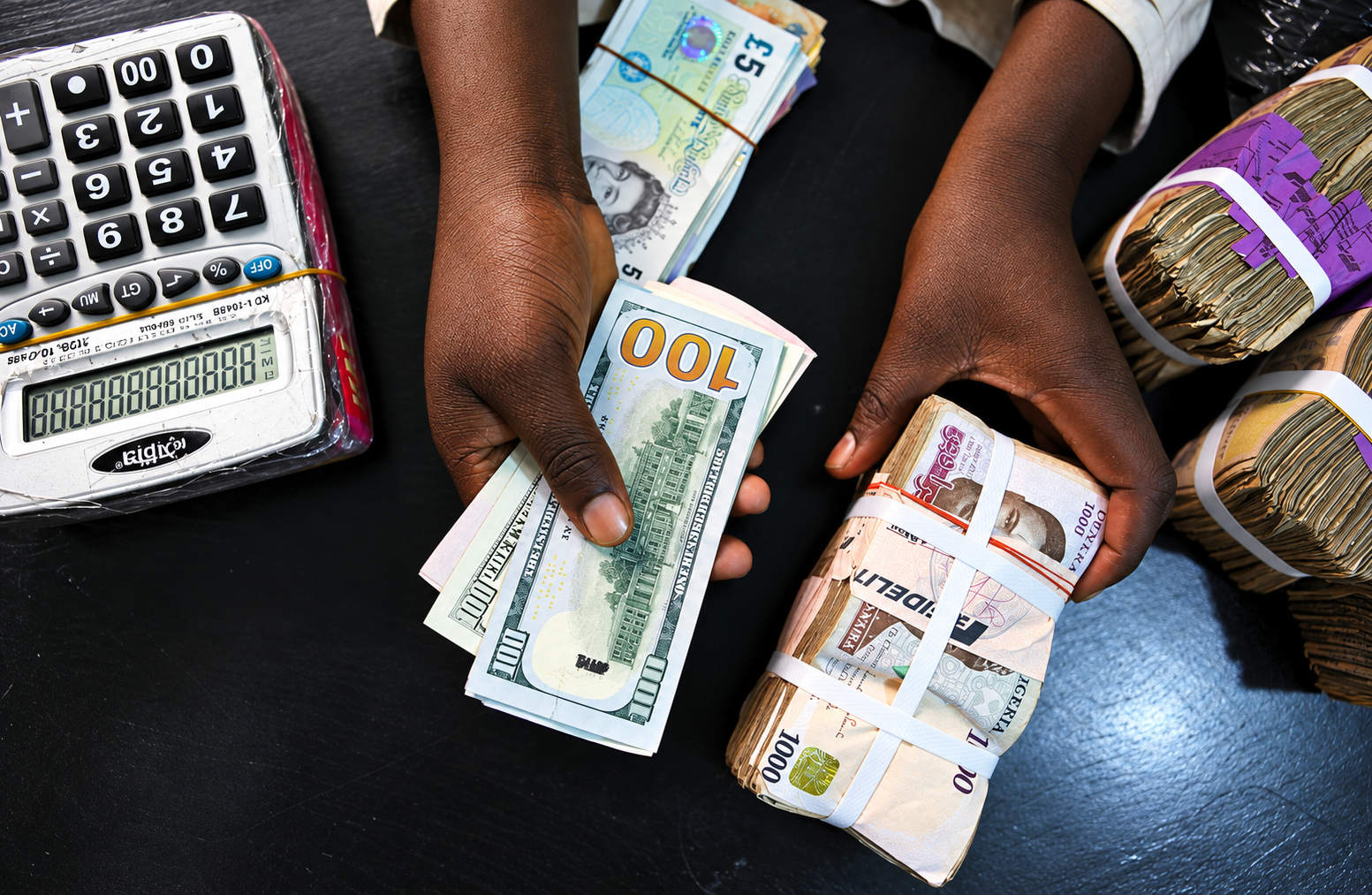

Africa’s debate about reducing dependence on the US dollar should not be framed as an ideological campaign against America. It is fundamentally a question of strategic resilience. The dollar remains indispensable to international commerce, but excessive dependence on any single foreign currency and financial infrastructure creates vulnerabilities that African governments should understand before a geopolitical crisis exposes them.
Consider a hypothetical future confrontation. Nigeria takes a foreign-policy decision that Abuja believes serves its national interest but which Washington regards as a serious threat to US security. The disagreement might concern defence cooperation, energy exports, military basing, technology transfers, relations with another major power or Nigeria’s position in an international conflict.
Nigeria could quickly discover that sovereignty is determined by more than control of territory, natural resources and armed forces. It is also determined by the infrastructure through which money moves. When international trade is overwhelmingly invoiced and settled through foreign currencies and institutions, decisions taken thousands of kilometres away can affect a country’s ability to receive export earnings, purchase equipment, finance imports or move money internationally.
Iran represents an extreme demonstration of this vulnerability. Africa should study its experience not because African countries should emulate Iranian foreign policy, but because it demonstrates what can happen when geopolitical confrontation collides with dependence on financial infrastructure controlled outside the country.
The Dollar Is More Than a Currency
The dollar dominates international finance for sound economic reasons. American financial markets are exceptionally deep and liquid, US Treasury securities provide an enormous pool of reserve assets, and decades of dollar-denominated commerce have created powerful network effects. Businesses use dollars partly because other businesses use dollars.
Africa therefore cannot—and should not—simply abandon the American currency. The strategic problem is concentration risk.
When two African countries trade but their companies must first acquire dollars to settle transactions, commerce that is fundamentally African becomes dependent upon foreign-exchange liquidity and external financial infrastructure. During normal periods this can increase transaction costs and pressure scarce foreign reserves. During geopolitical confrontation, the same dependence can become a strategic vulnerability.
The United States has repeatedly demonstrated that access to its financial system is an important instrument of foreign policy. Iran provides perhaps the clearest contemporary example.
The Iranian Lesson
Washington’s economic campaign against Tehran demonstrates that financial infrastructure can exercise power far beyond America’s territorial borders. The US Treasury has targeted banks, exchange houses, shipping companies and other intermediaries accused of facilitating Iranian transactions, while seeking to restrict sanctioned networks from accessing the American financial system.
The consequences extend beyond transactions physically taking place inside the United States. A bank operating in another country may still require dollar clearing, correspondent banking relationships or access to American institutions. Losing those relationships can impose enormous commercial costs.
This gives Washington substantial leverage over third parties considering transactions with sanctioned entities.
Iran consequently developed alternative mechanisms involving exchange houses, intermediaries, barter arrangements and non-dollar currencies. The US Treasury has itself documented Iran’s use of Chinese yuan generated through oil sales and the subsequent conversion of those revenues into currencies Tehran requires.
But Iran also demonstrates the weakness of attempting to construct financial independence after confrontation has already begun. Alternative networks can become expensive, complicated and vulnerable to further sanctions. Washington can extend enforcement towards shipping, insurers, exchange houses and financial intermediaries.
The lesson for Africa is therefore not to wait for sanctions before searching for alternatives. It is to build legitimate and transparent alternative payment infrastructure during peacetime.
What If Nigeria Disagreed With Washington?
Nigeria is not Iran. It maintains extensive American and European commercial relationships and is not presently confronting comprehensive US financial sanctions.
But strategy requires governments to prepare for circumstances that do not currently exist.
Imagine that Nigeria eventually makes a sovereign strategic decision that creates a severe disagreement with Washington. If Nigerian oil exports, corporate payments, borrowing and essential imports remain overwhelmingly dependent upon dollar infrastructure, potential American leverage could extend far beyond bilateral trade between the two countries.
Nigeria would then confront an uncomfortable question: how much strategic freedom does a country really possess if exercising that freedom could threaten its access to the financial infrastructure required for international commerce?
This is not an argument for confrontation with the United States. It is an argument for insurance.
Africa Already Has the Foundations
Africa does not need to construct an alternative architecture from nothing. The Pan-African Payment and Settlement System (PAPSS) was specifically designed to facilitate cross-border African payments using national currencies.
Under the system, a business can initiate payment in its own currency while the beneficiary receives payment in its local currency. Participating banks, payment providers and central banks provide the institutional infrastructure necessary to settle transactions.
The strategic implications are considerable.
A Nigerian company buying Ghanaian goods should not automatically require dollars simply because one African business is paying another. Neither should trade between Kenyan and Nigerian companies necessarily depend upon acquiring a currency issued by a country on another continent.
Expanding national-currency settlement could reduce demand for scarce foreign exchange while strengthening the practical foundations of the African Continental Free Trade Area.
Nigeria Should Lead
Nigeria has particular reasons to accelerate this transformation. It possesses Africa’s largest population, one of its largest economies and substantial regional commercial influence. It also understands the consequences of dollar scarcity.
Foreign-exchange shortages have repeatedly affected Nigerian companies, importers and consumers. Meanwhile, dollar-linked digital assets have created another potential form of currency dependence. The IMF reported that Nigeria received approximately $59 billion in crypto-asset inflows between July 2023 and June 2024, with dollar-pegged stablecoins increasingly being used for cross-border transactions and protection against naira depreciation.
Digitalisation could therefore paradoxically increase dollarisation if African financial infrastructure does not provide credible alternatives.
Nigeria should expand legal and transparent naira-denominated payment mechanisms while negotiating greater direct currency settlement with important trading partners.
Diversification, Not De-Dollarisation
Africa must nevertheless avoid replacing one dependency with another.
Moving trade wholesale from dollars into Chinese yuan would not constitute financial sovereignty. It could simply replace American dependence with Chinese dependence.
The strategic objective should therefore be diversification rather than ideological de-dollarisation.
The dollar should continue to be used where commercially appropriate, the euro for relevant European transactions and the yuan where Chinese trade makes direct settlement efficient. African currencies—including the naira, rand, cedi and shilling—should increasingly settle regional commerce where sufficient liquidity exists.
The objective is not to create an artificial African monetary fortress. It is to ensure businesses have multiple channels through which legitimate commerce can continue.
That is genuine resilience.
Weak Currencies Remain Africa’s Biggest Obstacle
Financial sovereignty, however, cannot simply be declared.
Businesses hold dollars because they trust them. If inflation persistently destroys the purchasing power of domestic currencies, governments cannot reasonably demand that companies prefer national money.
Nigeria therefore cannot transform the naira into a credible regional settlement currency without strengthening the economic foundations beneath it. That requires lower and more predictable inflation, credible monetary policy, deeper financial markets, sufficient reserves and confidence that legitimate capital can move without arbitrary restrictions.
Currency sovereignty begins with currency credibility.
This is particularly important because widespread adoption of dollar-denominated stablecoins could gradually weaken monetary sovereignty by reducing demand for domestic currencies.
Africa’s challenge is consequently both external and internal. Reducing dependence upon the dollar requires simultaneously making African currencies more attractive to Africans.
Build the System Before the Crisis
Iran provides the central strategic warning. Once serious geopolitical confrontation begins, building alternative financial infrastructure becomes much more difficult. Banks become cautious, intermediaries demand higher premiums, companies withdraw and foreign reserves become harder to move. Sanctions can spread from banking into insurance, shipping and technology.
Africa should construct resilience before it needs resilience.
PAPSS should be expanded. African central banks should develop additional bilateral currency arrangements. More AfCFTA commerce should be invoiced and settled in national currencies where economically viable. African development institutions should increase local-currency financing, while deeper regional foreign-exchange markets should allow large transactions to occur without automatically routing them through New York or London.
None of these measures requires abandoning Western financial institutions. They simply provide alternatives.
Financial Sovereignty Is National Security
Africa spent much of the twentieth century fighting for political sovereignty. The twenty-first century requires a broader understanding of financial sovereignty.
A country can possess a flag, parliament, military and central bank while remaining strategically vulnerable if much of its international commerce depends upon financial infrastructure controlled elsewhere.
Iran demonstrates what can happen when that vulnerability collides with geopolitical confrontation.
Nigeria should not assume it will ever face Iran’s circumstances, nor should African economic policy be designed around hostility towards the United States. But national strategy cannot assume that today’s alliances and friendships will remain unchanged indefinitely.
For DWA readers, the objective should therefore not be de-dollarisation for ideological reasons. It should be financial strategic autonomy.
Africa needs the dollar and will continue to need it for international commerce, investment and reserves. What the continent should gradually reduce is the need to use the dollar for transactions where another currency could efficiently perform the same function.
The strategic principle is straightforward: retain access to the dollar, build credible alternatives, expand national-currency settlement and ensure that no single external financial system can determine whether African states are capable of exercising their sovereign economic choices.
Majemite Jaboro writes for DWA


Leave a Reply