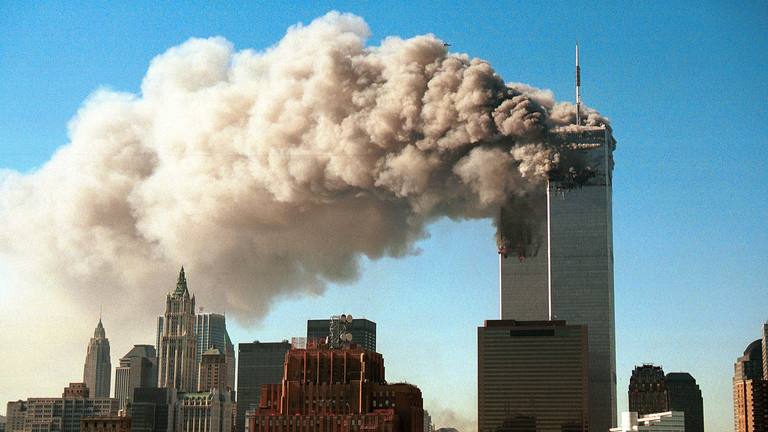

Twenty-five years ago, 19 al-Qaeda hijackers transformed four civilian airliners into weapons against the world’s most powerful country.
On September 11, 2001, two aircraft struck New York’s World Trade Center, another hit the Pentagon, while United Airlines Flight 93 crashed in Pennsylvania after passengers fought back. Nearly 3,000 people were killed. America marks the 25th anniversary today with commemorations centred on the victims and the consequences of a day that permanently changed US society and foreign policy.
But the geopolitical significance of 9/11 extends far beyond terrorism.
The attacks occurred at perhaps the greatest moment of American power in modern history. The Soviet Union had disappeared, NATO had expanded, China’s economic rise was only beginning to transform global politics, and no other country could match America’s combination of military, technological, financial and cultural power.
The United States had emerged from the Cold War as the world’s sole superpower.
September 11 shattered the psychological assumption that overwhelming national power automatically guaranteed security. More consequentially, Washington’s response helped consume resources and political attention during the very period in which the foundations of today’s multipolar world were taking shape.
The Unipolar Moment
The geopolitical environment of September 2001 is difficult to imagine from the perspective of 2026.
Russia was economically and militarily diminished following the Soviet collapse. China had yet to become America’s principal strategic competitor. Beijing joined the World Trade Organization only three months after 9/11.
The United States possessed unrivalled global military reach.
Its geographical position reinforced this advantage. The Atlantic and Pacific oceans separated the American homeland from the major centres of Eurasian military power.
Then 19 men armed with comparatively simple weapons demonstrated an uncomfortable truth.
Military superiority did not equal invulnerability.
Al-Qaeda could not defeat the United States conventionally. It instead exploited the openness of American society and civilian aviation to attack three symbols of American power: New York’s financial centre, the Pentagon and, apparently, a political target in Washington.
The physical destruction was immense.
The psychological destruction was greater.
Washington Goes to War
America’s initial military response enjoyed extraordinary international support.
NATO invoked Article 5 for the first—and so far only—time in its history, determining that the attack against the United States should be regarded as an attack against the alliance.
US forces entered Afghanistan in October 2001 to destroy al-Qaeda’s sanctuary and overthrow the Taliban government that had sheltered Osama bin Laden.
Within weeks, Taliban rule collapsed.
Had Washington’s response remained narrowly focused on destroying al-Qaeda’s ability to organise international terrorism, the geopolitical legacy of 9/11 might have been very different.
Instead, counterterrorism expanded into something considerably larger.
President George W. Bush declared a global “War on Terror.” Eighteen months after 9/11, the United States had overthrown governments in both Afghanistan and Iraq and embarked upon ambitious attempts to reconstruct their political systems.
Iraq was particularly consequential because Saddam Hussein’s government was not responsible for the September 11 attacks.
The mission had moved from retaliation to geopolitical transformation.
The $8 Trillion Response
The scale of America’s commitment was extraordinary.
Brown University’s Costs of War project estimates that US post-9/11 wars have cost approximately $8 trillion, including military operations, homeland-security expenditure, interest and long-term obligations towards veterans. The project estimates more than $2 trillion was spent on Afghanistan alone.
America certainly achieved important objectives.
Al-Qaeda’s central leadership was devastated. Bin Laden was killed in Pakistan in 2011. No terrorist organisation has subsequently succeeded in carrying out another attack on the American homeland approaching the scale of September 11. Al-Qaeda’s central organisation is considerably weaker today, although dangerous affiliates remain active, particularly in Africa, Yemen and South Asia.
But these successes came alongside enormous strategic costs.
Afghanistan became America’s longest war.
Iraq descended into insurgency and sectarian conflict. Abu Ghraib, CIA “black sites,” extraordinary rendition and controversial interrogation practices damaged America’s international reputation.
Nation-building proved vastly more difficult than regime change.
Then, in August 2021, the Taliban returned to Kabul.
Twenty years after overthrowing it, America departed Afghanistan with the organisation once again governing the country.
While America Fought, China Rose
This is where 9/11 intersects with today’s multipolar world.
China was already rising before September 2001. It would therefore be historically incorrect to argue that America’s War on Terror caused China’s emergence.
But the timing was remarkable.
While Washington’s strategic attention became concentrated on Afghanistan, Iraq, al-Qaeda and the broader Middle East, China experienced one of the greatest economic expansions in modern history.
It developed enormous manufacturing capacity, accumulated foreign reserves, modernised the People’s Liberation Army and became deeply embedded within global supply chains.
Today’s China possesses sophisticated nuclear forces, an enormous navy, advanced missiles, space capabilities and an increasingly formidable defence-industrial base. CSIS argues that the United States can no longer assume the overwhelming military advantage—or “overmatch”—against China that characterised the post-Cold War era.
The contrast is striking.
America spent two decades trying to transform Afghanistan.
China spent those decades transforming China.
Russia Returned Too
Russia followed a different trajectory.
Vladimir Putin inherited a weakened post-Soviet state but gradually rebuilt central authority, military capability and Russian willingness to challenge Western geopolitical expansion.
Washington’s relationships with Moscow deteriorated through disputes over NATO enlargement, Georgia, missile defence, Ukraine and eventually Russia’s 2022 full-scale invasion.
Again, 9/11 did not create Russian revisionism.
But America’s concentration on counterterrorism coincided with the reconstruction of Russian power.
By the time Washington formally shifted its strategic emphasis towards great-power competition, both China and Russia presented considerably greater challenges than they had in 2001. US national-security attention has subsequently moved back towards Beijing and Moscow.
The Domestic Security State
September 11 also transformed America internally.
The Department of Homeland Security was created in what Brown’s Costs of War project describes as the largest reorganisation of the US government since the Second World War. Airport security changed dramatically. Intelligence authorities expanded, surveillance increased and counterterrorism became embedded across federal, state and local institutions.
The USA PATRIOT Act expanded government powers.
For many Americans, these measures represented necessary protection against another catastrophic attack.
For critics, some measures represented a lasting reduction in privacy and civil liberties.
Muslim Americans also experienced increased suspicion, discrimination and profiling in the years after the attacks. Twenty-five years later, AP notes that different American communities consequently remember the post-9/11 period in markedly different ways.
The terrorists therefore failed to destroy the American state, but they succeeded in forcing it to reorganise itself around a threat posed by a relatively small non-state organisation.
Did 9/11 End American Primacy?
Not by itself.
The United States remains an extraordinary global power in 2026. It possesses unmatched alliance networks, nuclear weapons, global military bases, enormous financial influence and world-leading technology companies.
Nor should al-Qaeda be credited with somehow engineering China’s rise or America’s relative decline.
The stronger argument concerns strategic opportunity cost.
The Wall Street Journal’s assessment on the anniversary makes essentially this distinction: the attacks mattered enormously, but Washington’s subsequent choices arguably did more to alter the world order than the attack itself. While America concentrated on the War on Terror, China expanded and Russia recovered.
That is a considerably more important lesson than claiming 19 terrorists somehow defeated a superpower.
They did not.
America defeated al-Qaeda’s central organisation militarily.
But Washington then chose a strategy whose ambitions became far larger than destroying al-Qaeda.
From Unipolarity to Multipolarity
The world America confronts 25 years later is fundamentally different.
China is a peer-level economic competitor.
Russia has demonstrated its willingness to use large-scale military force.
India is emerging as another major centre of power.
BRICS has expanded well beyond its original membership and now represents nearly half the world’s population and around 40 percent of global economic output when measured at purchasing-power parity, even though significant internal disagreements limit its cohesion.
Middle powers increasingly resist choosing permanently between Washington and Beijing.
Across Africa, governments simultaneously develop military, economic and diplomatic relationships with China, Russia, Türkiye, Gulf states, Europe and the United States.
This is what multipolarity looks like.
Not the disappearance of American power, but the proliferation of alternatives.
The Lesson for Africa
For DWA and BusinessDay readers, this transformation has particular importance.
Africa experienced some of the secondary consequences of the War on Terror directly. American counterterrorism operations expanded into Somalia and the Sahel, while the collapse of Libya after Western intervention contributed to weapons proliferation and instability across West Africa.
Today Washington’s priorities are changing again.
Counterterrorism must compete with China, Russia, cyber warfare, artificial intelligence, space security and maritime competition for finite resources.
Indeed, contemporary US counterterrorism specialists are now warning against allowing the pendulum to swing too far: concentrating on China and Russia while forgetting that jihadist organisations remain capable of exploiting weak states and intelligence failures.
Africa sits precisely where these two strategic eras overlap.
The continent faces persistent terrorism while simultaneously becoming an arena of great-power competition.
Strategic Conclusion
September 11 did not destroy American power.
It revealed its limits.
The world’s strongest military could overthrow governments thousands of kilometres from home, but struggled to construct durable political orders afterwards. Trillions of dollars could finance war, but could not guarantee strategic success.
Meanwhile, competitors used the intervening decades to accumulate economic, technological and military power.
The central lesson of 9/11 at 25 is therefore not simply that America became vulnerable on September 11, 2001.
It is that power can be enormous and still be misallocated.
The United States entered the twenty-first century enjoying an extraordinary degree of global predominance. It emerges from the first quarter-century still the world’s most powerful state by many measures—but operating in a system where China, Russia, India and increasingly assertive middle powers possess far greater room for manoeuvre.
For Washington, the challenge of the next 25 years will be very different from that which followed 9/11.
It will not primarily be about hunting terrorists across failed states.
It will be about learning how to exercise American power effectively in a world in which the United States is extraordinarily powerful—but no longer uncontested.
Majemite Jaboro writes for DWA


Leave a Reply