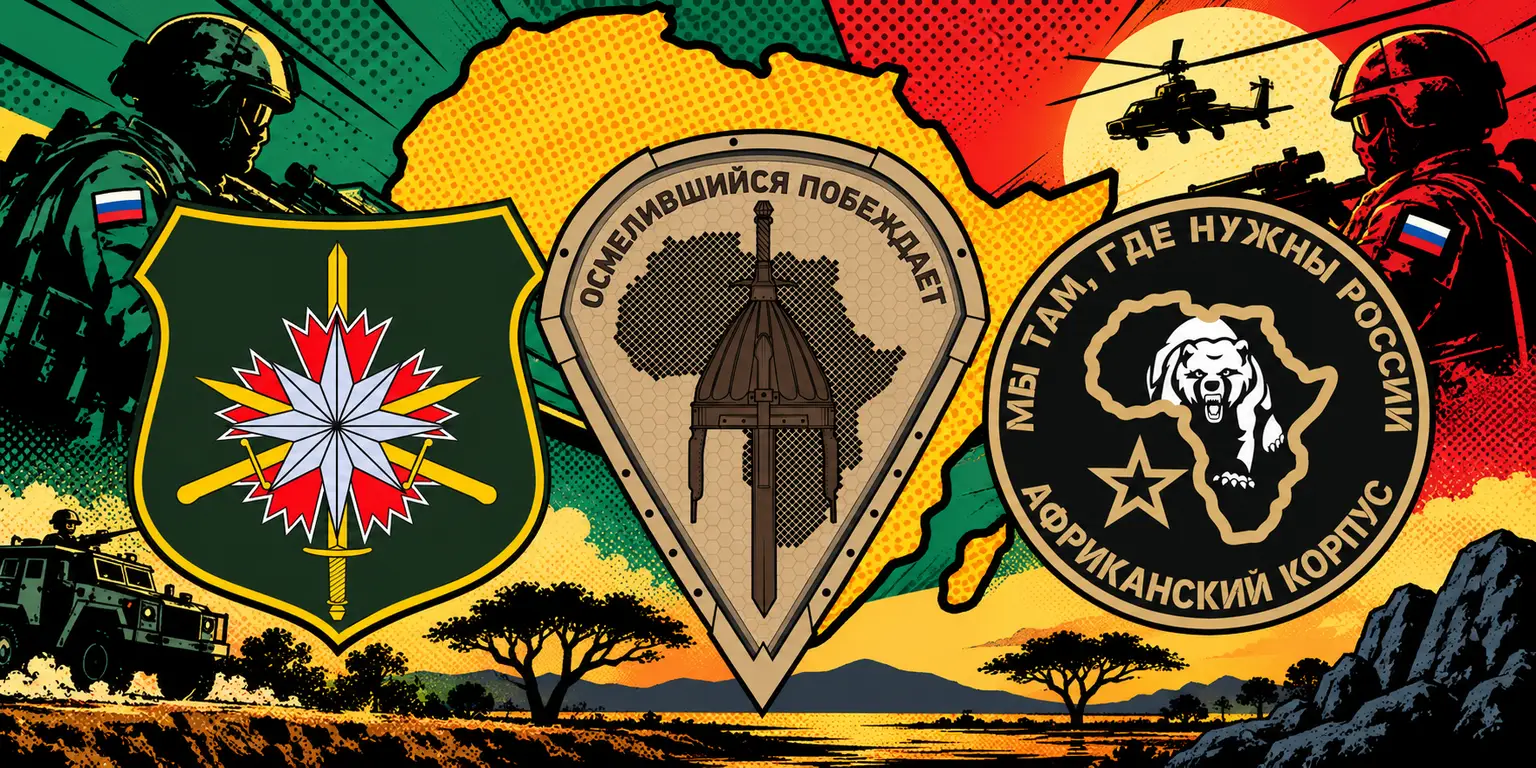
The decisive question is not whether Russian personnel can replace departing Western forces in parts of Africa. It is who controls the mission, the intelligence, the supply chain and the political price of protection. The Russia Africa Corps has become central to that question, particularly across the Sahel, where governments confronting insurgency and diplomatic isolation are searching for security partners prepared to operate on different terms.
For African states, this is not simply another foreign military partnership. It is part of a wider contest over political influence, mineral access, strategic geography and the future of national security institutions. Moscow’s evolving presence offers some governments immediate regime-security benefits. It can also deepen dependency, weaken civilian oversight and leave national forces tied to a partner whose objectives extend well beyond counter-insurgency.
What the Russia Africa Corps Represents
The Africa Corps emerged from Moscow’s effort to bring parts of the Wagner network under tighter state direction after Yevgeny Prigozhin’s 2023 mutiny and subsequent death. Wagner had built influence through a deliberately ambiguous model: military advisers, combat units, commercial entities, political operatives and information campaigns could work in parallel while the Russian state retained plausible distance.
The Africa Corps points towards a more formalised version of that model. It is widely understood to operate under closer Russian defence and intelligence supervision, though its structure, personnel and country-level arrangements are not always transparent. It should not be treated as a single, standard expeditionary force with an identical mandate everywhere. In practice, Russian deployments may include instructors, protection details, special operations personnel, logistics specialists and contractors operating alongside local forces.
That ambiguity is operationally useful to Moscow. It permits a rapid political offer to governments under pressure while making it difficult for citizens, parliaments and regional bodies to establish who is accountable for conduct, costs or strategic commitments. For African partners, the key issue is therefore not the label attached to the deployment. It is the written mandate, chain of command and legal status behind it.
Why the Sahel Matters to Moscow
Mali, Burkina Faso and Niger have become the most visible theatre for the reconfiguration of Russian influence in Africa. The withdrawal or reduction of French, European and United Nations security presences created a demand for alternatives. Russia has presented itself as a partner willing to provide security assistance without public lectures on governance, electoral timetables or human rights.
That offer has political appeal for military-led governments seeking to demonstrate a clean break from former external patrons. It also carries clear limits. Counter-insurgency is not won by changing the nationality of advisers or acquiring a new supplier of helicopters, artillery and ammunition. Armed groups exploit local grievances, porous borders, weak administration, illicit economies and distrust between communities and the state. Those conditions outlast any foreign deployment.
Russian-backed operations in Mali have demonstrated both the attraction and the danger of this approach. They can increase the government’s capacity to mount offensive operations and project resolve. Yet allegations of civilian harm and abuse associated with some operations have intensified the risk of alienating populations whose co-operation is essential to intelligence-led security campaigns. A force that clears territory without building legitimate administration may create a temporary military gain and a longer political liability.
Nor should Russian engagement be read solely through the Sahel. The legacy of Wagner remains relevant in the Central African Republic and Libya, where security services, commercial interests and political influence have long been intertwined. The Africa Corps may seek to inherit parts of these networks, but continuity is not guaranteed. Local bargains, rival elites, existing armed groups and the interests of other external powers differ sharply from one country to another.
The Strategic Trade-Off for African Governments
The central trade-off is between speed and control. A government facing attacks near its capital or pressure along a frontier may reasonably prioritise immediate military support. Russian assistance can arrive with fewer political conditions than many Western arrangements, and that can be useful where conventional partnerships have failed to meet urgent needs.
But security assistance becomes strategically costly when it is opaque. If payment is concealed through mining concessions, state-linked commercial privileges or off-budget arrangements, national authorities may trade a short-term capability for long-term loss of policy freedom. Resource agreements deserve the same scrutiny as defence procurement because both can shape a state’s capacity to finance its own security in future.
There is also an institutional question. Foreign advisers embedded too deeply in operational planning can displace rather than develop domestic command capacity. The most capable external partner may still leave a country weaker if its forces become dependent on foreign intelligence, communications, maintenance, air mobility or ammunition. Strategic autonomy is not achieved by exchanging one external security guarantor for another.
This is especially significant where Russian equipment is added to already fragmented arsenals. African militaries often operate systems sourced from several suppliers, each with different training demands, spare parts chains and ammunition standards. A politically attractive acquisition can become a readiness problem if governments cannot sustain it independently. Defence ministries should measure offers against lifecycle costs, not delivery ceremonies.
Africa Corps and the Contest for Political Space
Moscow’s security engagement has an information dimension as well as a military one. Russian-linked narratives frequently frame political choices as a stark contest between sovereignty and Western control. That message resonates where former colonial powers are viewed with deep suspicion and where external interventions have failed to deliver stability.
Yet sovereignty requires more than defiant rhetoric. It requires capable institutions able to negotiate contracts, supervise foreign personnel, protect citizens, audit public finances and maintain independent diplomatic options. A state cannot claim strategic independence while allowing another power to shape its threat assessments, political messaging or extractive agreements beyond meaningful national oversight.
African regional institutions also face a difficult task. They must avoid treating every non-Western security partnership as inherently illegitimate, which would deny states the right to diversify their relationships. At the same time, they cannot ignore the cross-border effects of unaccountable armed deployments, especially in a region where insurgent groups, weapons flows and displaced communities move across frontiers with ease.
What a Sovereignty-First Response Looks Like
The relevant response is not blanket alignment with or against Russia. It is disciplined bargaining. Governments considering or maintaining Africa Corps arrangements should insist on agreements that define personnel numbers, permitted activities, command relationships, weapons custody, legal jurisdiction and a clear timetable for review. Parliamentarians and national audit institutions need enough visibility to assess financial obligations and prevent security contracts from becoming private political instruments.
Military planners should also separate emergency support from long-term force development. A foreign partner may assist with immediate protection, but national plans must prioritise indigenous intelligence networks, professional non-commissioned officers, air and ground maintenance, border surveillance and community engagement. These are less dramatic than foreign deployments, yet they determine whether a security force can endure once external backing shifts elsewhere.
Finally, African diplomacy should preserve options. A diversified defence relationship is useful only if it prevents dependency rather than multiplying it. Engagement with Russia, Türkiye, China, European states, Gulf partners and others should be judged by the same standard: does the arrangement strengthen national institutions, public accountability and operational self-reliance?
The Russia Africa Corps is best understood as a test of African statecraft, not merely Russian reach. Governments that demand transparency, retain command authority and invest in their own forces can turn external support into a temporary tool. Those that outsource security without safeguards may discover that the price of protection is influence they cannot easily recover.


Leave a Reply