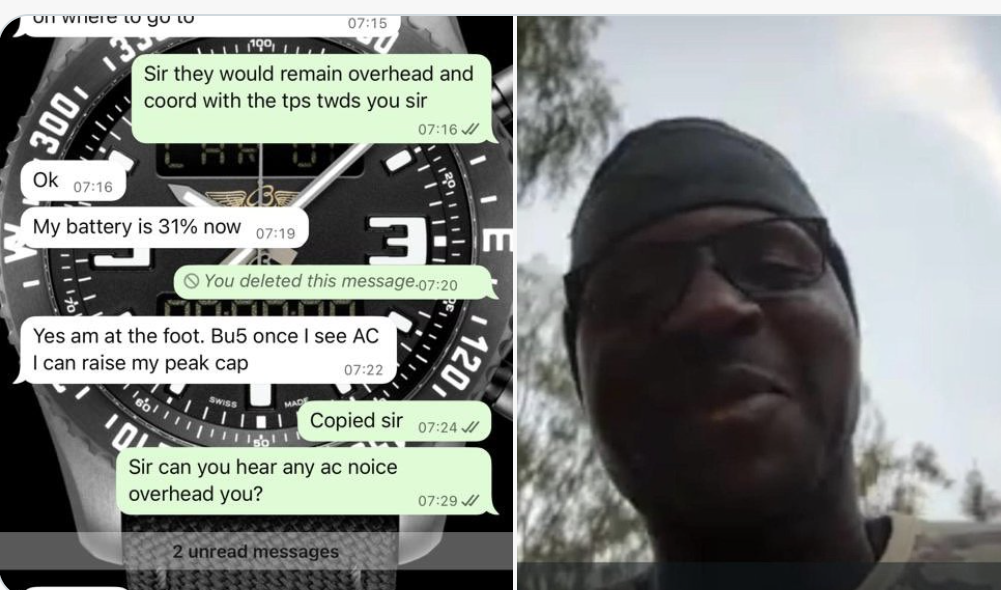
The death of Brigadier General Musa Uba has triggered one of the most intense waves of scrutiny, speculation, and institutional self-doubt within Nigeria’s defence community since the early years of the Boko Haram insurgency. The circumstances surrounding the ambush, the apparent breakdown in communication, and the Defence Headquarters’ (DHQ) opaque handling of information have combined to produce an information vacuum—one that ISWAP swiftly exploited and that Nigerians rapidly filled with their own theories. Among the most unsettling is the suggestion that insider elements or sympathisers within the military may have tipped off insurgents about the commander’s patrol movement.
While there is no verified evidence of insider sabotage, the pattern of events and the ensuing communication failures have elevated these suspicions from fringe chatter to mainstream debate across security circles.
A Patrol Too Small—And an Ambush Too Precise
According to multiple field officers familiar with the incident, Brig.-Gen. Uba departed on what was described as a “light, mobile patrol”—variously estimated as a section or small platoon—rather than a full company or battalion movement. This is standard practice in the Sambisa fringes, where mobility is often more important than mass.
However, what is not standard is the timing and accuracy of the ambush. The attack unfolded along the Wajiroko–Azir Multe corridor, at a choke point the insurgents selected with near-surgical precision. ISWAP’s ability to stage a rapid strike in this specific window has raised uncomfortable questions:
-
Was ISWAP conducting live surveillance?
-
Did they intercept communications?
-
Or did someone leak information?
None of these possibilities can be ruled out. But without transparent communication from DHQ, the third option—insider compromise—has gained disproportionate traction among officers and civilians alike.
A 24-Hour Fog of Official Misinformation
Where the situation truly deteriorated was in DHQ’s handling of information.
For the first 24 hours after the incident, DHQ publicly stated that the commander had “led a successful breakout” and returned safely to base. At the same time, internal signals within the theatre indicated a desperate search-and-rescue operation was underway, with ground troops attempting to locate the general based on his last coordinates and intermittent communications.
This contradiction—between the official press statement and the operational reality—created fertile ground for rumours.
By the time DHQ began quietly revising its internal assessments, the public narrative had already slipped out of its hands.

Amaq Exploits the Vacuum
Sensing the misinformation gap, ISWAP’s media arm, Amaq, moved quickly. It published a propaganda bulletin claiming that the general had been captured alive after fleeing the ambush. Although unverified and consistent with the group’s long-standing psychological warfare strategy, the release gained enormous traction on social media.
Why?
Because at that moment, Amaq provided clarity, while the Nigerian military did not.
This is a familiar pattern. Whenever DHQ delays communication, issues contradictory statements, or attempts to downplay field realities, insurgent media steps in to shape the narrative—often with significant success.
The Insider Leak Theory: A Symptom of a Larger Trust Deficit
The growing speculation about possible ISWAP sympathisers in uniform is not merely about this incident. It reflects a deepening public and internal distrust that has been building for years:
-
Documented cases of soldiers leaking operational movements to insurgents.
-
Arrests of troops caught selling ammunition, food, and uniforms.
-
Longstanding fears of radicalisation within some military formations.
-
Persistent operational setbacks that seem to stem from compromised intelligence.
Against this backdrop, the precision of the Wajiroko ambush appears to many as part of a pattern—not an anomaly.
However, without evidence, such speculation remains exactly that: speculation. But the fact that Nigerians consider it plausible signals a profound crisis of confidence.
Strategic Costs of DHQ’s Opacity
The real damage lies not only in the loss of a senior officer, but in how the institution failed to control the narrative:
-
Troop morale suffers when frontline soldiers suspect their own institution is concealing information.
-
The public loses trust in the military’s communication practices.
-
Insurgent groups gain psychological dominance, shaping perceptions faster and more effectively than state institutions.
-
Operational secrecy becomes counterproductive, interpreted as dishonesty rather than prudence.
In modern warfare—especially insurgency warfare—information is as critical as ammunition. DHQ’s failure to communicate transparently ceded the information battlefield to the enemy.
Conclusion
The death of Brig.-Gen. Uba is a national tragedy, but the communication failures that followed have magnified its impact. Nigeria does not need speculation about insider sabotage to weaken morale; poor communication practices can do that all on their own.
If DHQ hopes to restore public trust and internal confidence, it must overhaul its information-management strategy. In the absence of clear, timely, and credible communication, insurgent propaganda will continue to fill the void—and conspiracy theories will flourish.
Majemite Jaboro


Leave a Reply