
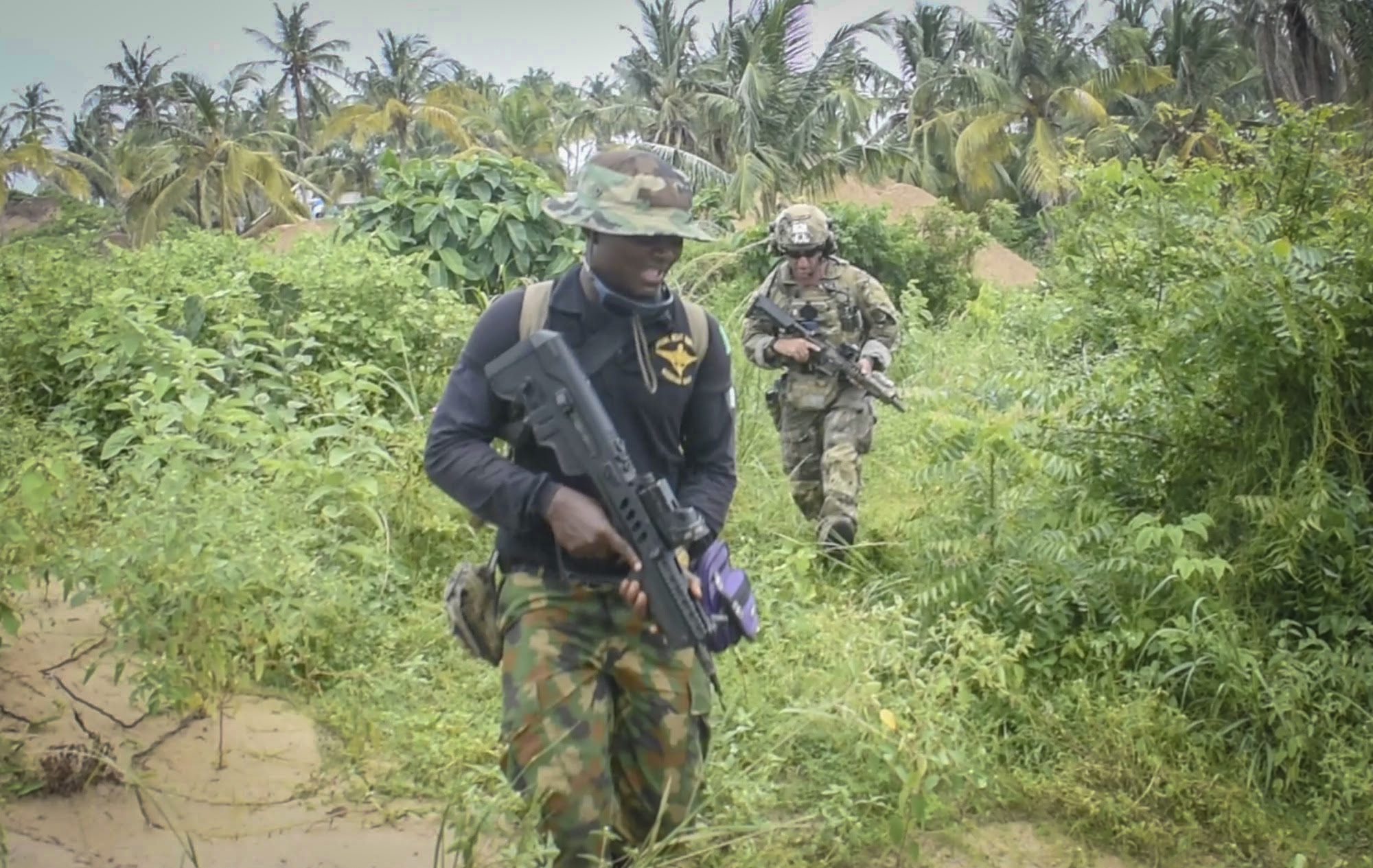

People’s War Theory — often associated with Mao Zedong and later refined in Vietnam — is one of the most influential doctrines in modern asymmetric warfare. At its core, it views conflict not as a contest of armies, but as a struggle for control of the population, where political influence, psychological dominance, and military action are fused into one unified strategy.
In a People’s War, the population is not a neutral backdrop — it is the battlefield, the resource base, the intelligence network, and the centre of gravity.
This doctrine shapes how Boko Haram, ISWAP, Fulani bandit networks, and IPOB/ESN survive today, even against overwhelming state firepower.
1. The Central Principle: “The People Are the Water, the Guerrillas Are the Fish”
The foundational idea is simple:
Insurgents cannot survive without integrating themselves into the social, economic, and psychological life of the population.
This means:
-
civilians supply food
-
civilians provide intelligence
-
civilians offer concealment
-
civilians serve as bargaining chips
-
civilians become political leverage
-
civilians are used to delegitimize the state
If insurgents lose the people, they lose the war.
If the government loses the people, insurgents gain the advantage.
This is why insurgents prioritise perception, fear, narrative, and relationships as much as weaponry.
2. People’s War Is 70% Political, 30% Military
People’s War Theory argues that military force alone cannot defeat an insurgency. The fighters are only one wing of the struggle. Equally important are:
-
political mobilisation
-
social influence
-
information control
-
psychological dominance
-
propaganda
-
economic survival systems
Every insurgent movement has:
-
a military wing (fighters, saboteurs, units)
-
a political wing (ideology, recruitment, messaging, collaborators, funding networks)
These are not separate — they reinforce each other.
This explains why decades of kinetic operations in Nigeria have weakened insurgents but have never completely dismantled them.
3. The Three-Phase People’s War Framework
Classic People’s War unfolds in three phases, which insurgent movements may move through fluidly depending on pressure from the state.
Phase 1: Organisation and Preparation
Insurgents seek to:
-
build cells
-
recruit members
-
infiltrate communities
-
gather weapons
-
establish propaganda networks
-
cultivate local support
This is the incubation phase — invisible but critical.
Phase 2: Guerrilla Warfare
Attacks begin, not to hold territory, but to:
-
weaken morale
-
expose state vulnerabilities
-
force government overreactions
-
demonstrate insurgent capability
-
shape public perception
-
gain leverage among civilians
This is where ambushes, kidnappings, assassinations, and psychological operations dominate.
Phase 3: Conventional/Administrative Expansion
Insurgents attempt to:
-
impose governance (taxes, rules, courts)
-
enforce territorial influence
-
replace or weaken state authority
-
dictate movement, markets, and security
Examples in Nigeria:
-
Boko Haram’s Caliphate (2014–2015)
-
Bandit enclaves in Birnin Gwari and Zamfara forests
-
ESN sit-at-home enforcement in the South East
Not all movements reach this phase, but all attempt elements of it.
4. Why People’s War Theory Explains Nigeria’s Insurgencies
Nigeria’s four major armed groups — Boko Haram, ISWAP, Fulani bandits, and IPOB/ESN — all adapt this strategy in different forms.
A. Boko Haram & ISWAP
-
embed into fishing communities
-
tax civilians
-
use Lake Chad islands as social sanctuaries
-
run shadow governance
B. Fulani Bandit Networks
-
dominate rural populations through fear
-
control forest corridors
-
use kidnapping to finance operations
-
intimidate or co-opt local elites
C. IPOB/ESN
-
rely on diaspora support and online mobilisation
-
dominate narrative space in the South East
-
impose compliance through sit-at-home orders
-
delegitimise state institutions
All three rely on:
-
civilian dependency
-
political messaging
-
psychological warfare
-
infiltration of communities
-
economic systems (taxation, ransom, smuggling)
People’s War Theory predicts exactly this:
Armed groups survive because they root themselves within the population, not outside it.
5. Why States Struggle Against People’s War
Conventional armies are designed for:
-
territorial defence
-
large-unit operations
-
visible enemies
-
symmetric conflict
Insurgents fight a political, not purely military, war.
They do not need to win — they only need to avoid losing.
For the state to win:
-
kinetic force must be combined with political engagement
-
intelligence must be community-driven
-
governance must be visible and credible
-
populations must be protected, not just territory
-
propaganda must be countered as aggressively as bullets
Without these, the insurgents’ political wing remains intact, enabling the military wing to regenerate.
Conclusion: People’s War Is the Survival Blueprint of Nigeria’s Insurgencies
At its heart, People’s War is a strategy of embedding the insurgency into the population so completely that the state cannot attack the fighters without harming or alienating civilians.
This is why insurgencies in Nigeria endure.
This is why four different movements in four regions behave in similar ways.
This is why military solutions alone have not delivered national stability.
To defeat movements built on People’s War Theory, the state must fight a political war, an economic war, an intelligence war, and a psychological war — not just a battlefield war.
Majemite Jaboro writes for DWA.


Leave a Reply