Nigeria was once the undisputed anchor of West African stability — the backbone of ECOWAS peace enforcement from Liberia and Sierra Leone to Guinea-Bissau and, later, AU and UN missions in Darfur. Nigerian troops, Nigerian airlift, Nigerian logistics, and Nigerian command leadership defined regional security for more than two decades. Today, that footprint has visibly shrunk, not because Nigeria has lost capacity, but because internal security crises and regional political upheaval have narrowed Abuja’s strategic bandwidth.

Yet recent developments show that Nigeria’s defence diplomacy is not dead — it is evolving.
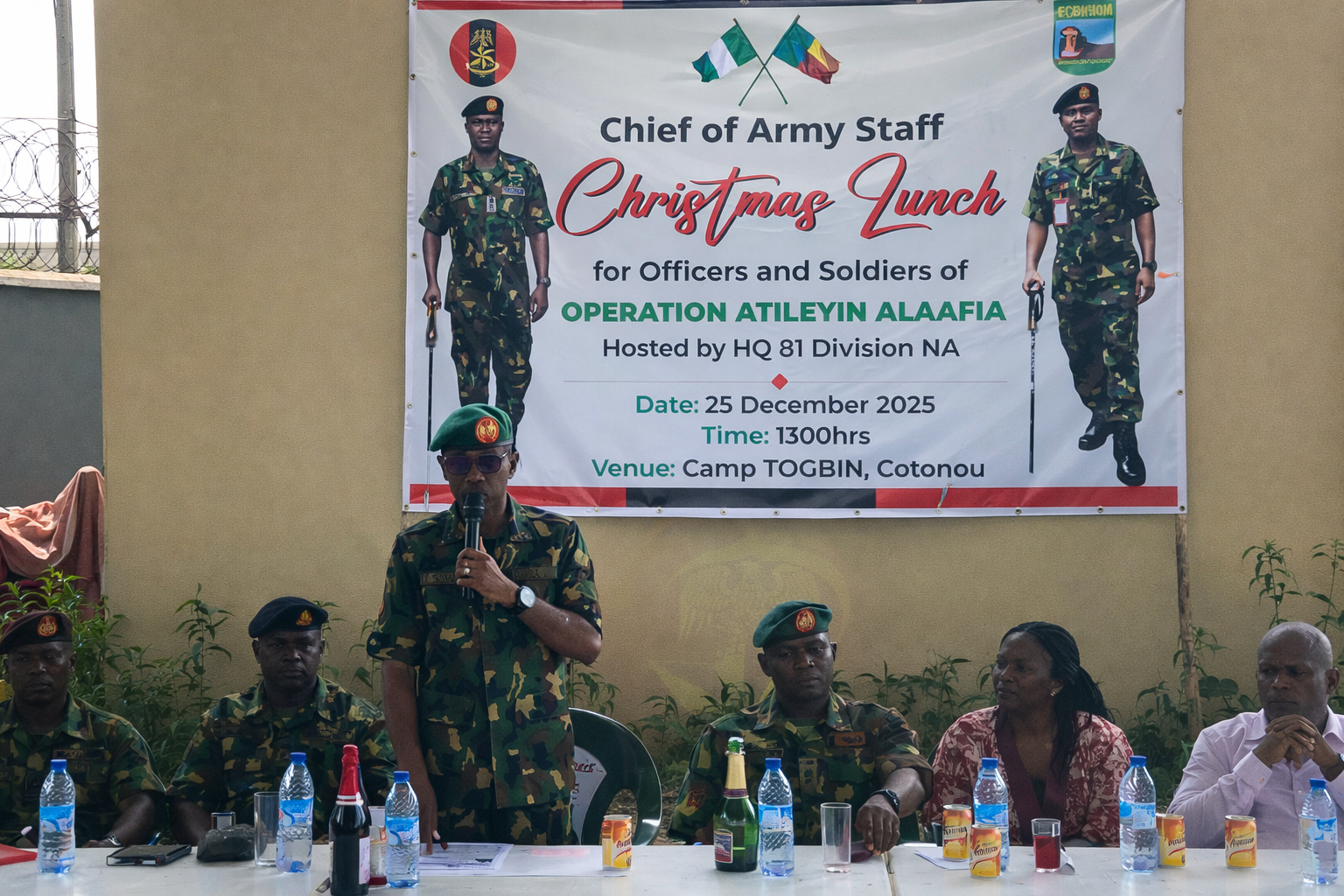
On Christmas Day, 25 December 2025, the Chief of Army Staff (COAS), Lieutenant General Waidi Shaibu NAM, hosted a Christmas luncheon for Nigerian Army troops deployed to the Republic of Benin under Operation ATILEYIN ALAAFIA. The operation followed a foiled coup attempt in Benin, with Nigerian troops working jointly alongside the Beninese Armed Forces to stabilise the country and restore normalcy.
This was not a ceremonial gesture. It was defence diplomacy in its most practical form.
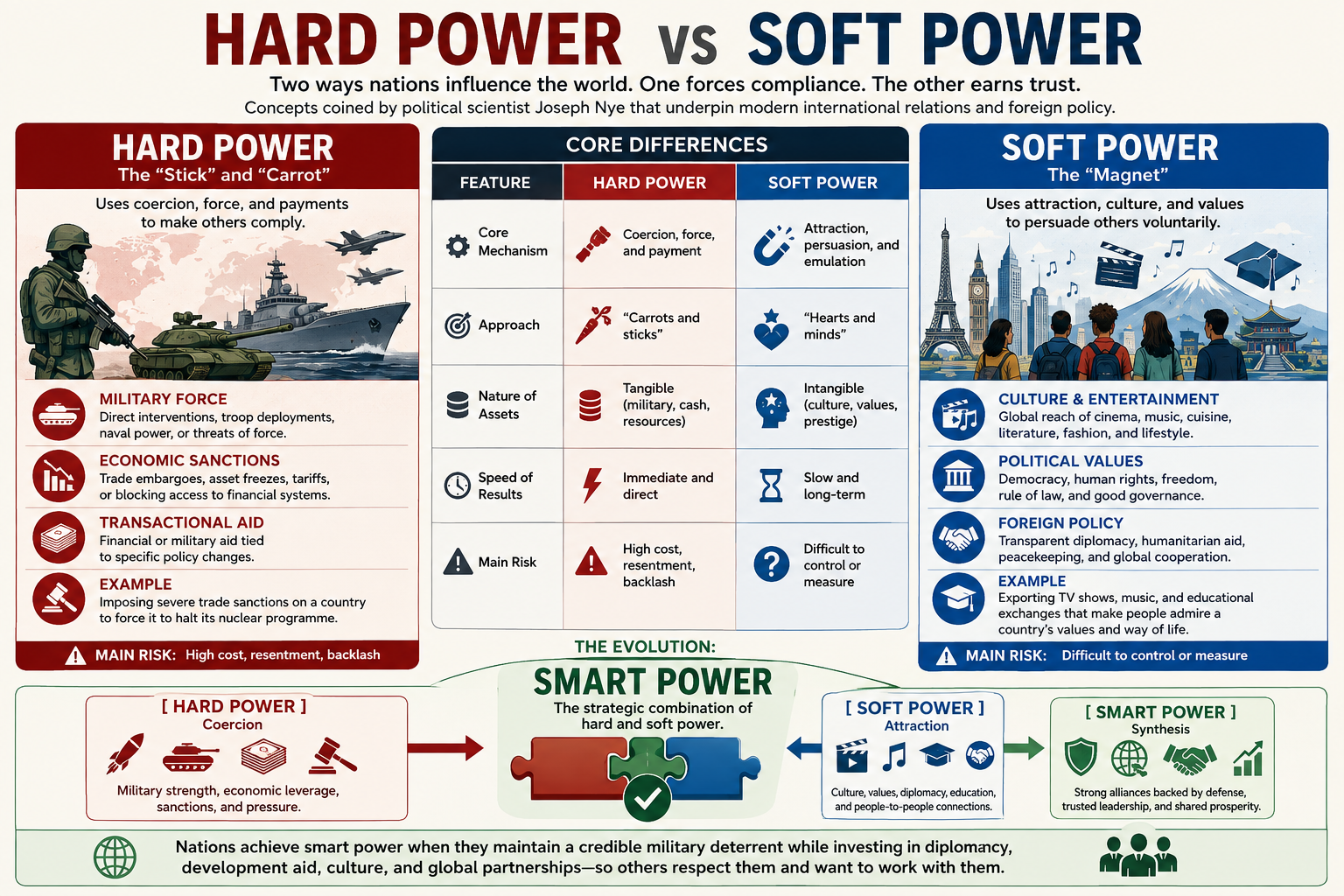
Defence Diplomacy Is Not Soft Power — It Is Strategic Power
Defence diplomacy is often misunderstood as symbolism: parades, visits, photographs, and speeches. In reality, it is one of the most effective tools of power projection available to a regional leader. It builds trust, deters instability, reassures allies, and prevents crises from escalating into wars that invite external intervention.
Nigeria’s deployment to Benin is a reminder that regional stability begins before borders are crossed by insurgents or mercenaries. A coup in Benin would not have remained a Beninese problem. It would have spilled into Nigeria’s southwest, disrupted trade corridors, and created new security vacuums for criminal networks.
By acting early — quietly, cooperatively, and professionally — Nigeria prevented a small crisis from becoming a regional contagion.
Operation ATILEYIN ALAAFIA: Diplomacy in Uniform
During the Christmas engagement, the General Officer Commanding 81 Division, Major General Farouk Mijinyawa, represented by Brigadier General Ibrahim Bunu Sheriff, delivered the COAS’s message to the troops. He emphasised the significance of Christmas as a period of reflection and renewal, while commending the soldiers’ resilience, professionalism, and sacrifice.
Many of the deployed officers and soldiers were unable to spend the festive season with their families — a reality of regional peacekeeping that is often overlooked. The Nigerian Army’s visible reassurance of welfare support and operational commitment matters. Morale is a strategic asset in peace operations.
The presence of officers from the Beninese Army and defence attaché staff from the Nigerian Embassy in Cotonou underscored something more important than ceremony: interoperability, trust, and political alignment. These are the foundations of effective defence diplomacy.
1. The Decline of ECOWAS Influence
Despite such successes, the broader ECOWAS security architecture is under strain. The coups in Mali, Guinea, Burkina Faso, and Niger have severely weakened the bloc’s authority. Three forces drive this decline:
-
Loss of legitimacy, especially in francophone states that increasingly view ECOWAS as inconsistent or externally influenced
-
Internal divisions, with member states split on how to respond to unconstitutional changes of government
-
Growing Russian influence in the Sahel, filling vacuums left by weakened regional consensus
Nigeria now faces a strategic choice: attempt to rebuild ECOWAS cohesion or allow the organisation to fragment into competing security blocs.
Standing still is not an option.

2. The Rise of the Alliance of Sahel States (AES)
Mali, Burkina Faso, and Niger have formed the Alliance of Sahel States (AES) — a political and military bloc operating outside ECOWAS structures. This represents the most serious challenge to West African collective security since the Cold War.
AES changes the security geometry of the region. It creates a northern arc increasingly aligned with Russian security support and alternative diplomatic frameworks. If Nigeria ignores AES, it risks ceding strategic depth along its northern flank.
Nigeria’s response must be multidimensional:
-
Diplomacy to prevent permanent regional bifurcation
-
Economic incentives to keep channels open
-
Military coordination to avoid accidental confrontation
-
Counter-extremism cooperation, because jihadist threats do not respect new political blocs
Defence diplomacy is Nigeria’s best tool to manage this fragmentation without escalation.
3. Nigeria’s Peacekeeping Legacy Still Matters
Despite domestic pressures, Nigerian peacekeepers remain widely respected across Africa. That reputation is not historical nostalgia — it is a living asset.
Nigeria’s strengths include:
-
disciplined, professional troops
-
experienced field commanders
-
robust logistics and sustainment capability
-
airlift and mobility assets
-
command experience in multinational environments
These capabilities position Nigeria as a natural leader in:
-
AU peace support operations
-
UN hybrid missions
-
East African and Central African crisis responses
A strong Nigeria reassures Africa. A withdrawn Nigeria creates space for external powers to define African security outcomes.
4. Defence Diplomacy Priorities for Nigeria
To reclaim leadership, Nigeria must focus on four strategic priorities.
A. Rebuild ECOWAS Unity
Nigeria must spearhead pragmatic frameworks for engaging coup-affected states without legitimising unconstitutional rule. Isolation hardens juntas; structured engagement creates leverage.
B. Develop an ECOWAS Rapid Deployment Force
A credible, standing force capable of stabilising crises early would prevent the need for foreign intervention. Nigeria’s experience and scale make it indispensable to such a force.
C. Coordinate AU Counterterror Strategy
Fragmented counterterror efforts waste resources. Nigeria must push for unified AU doctrines against Sahelian jihadist networks, harmonising intelligence, operations, and financing controls.
D. Strategic Dialogue With Global Powers
Nigeria must engage — not avoid — the multipolar contest in Africa. Dialogue with the U.S., Russia, China, and European partners should be guided by Nigerian interests, not ideological alignment.
Conclusion: Leadership Without Noise
The Christmas engagement in Benin was a small event with large meaning. It demonstrated that Nigeria still understands the essence of defence diplomacy: quiet presence, professional conduct, regional reassurance, and early action.
Nigeria’s internal security challenges are real and consuming. But they must not blind Abuja to the wider geopolitical shifts across West Africa. Defence diplomacy is power projection without firing a shot — and when done correctly, it prevents wars rather than winning them.
If Nigeria wants stability at home and influence abroad, it must continue to show up — not loudly, not recklessly, but decisively.
That is how regional leadership is maintained.
Majemite Jaboro a London based defence analyst writes for DWA


Leave a Reply