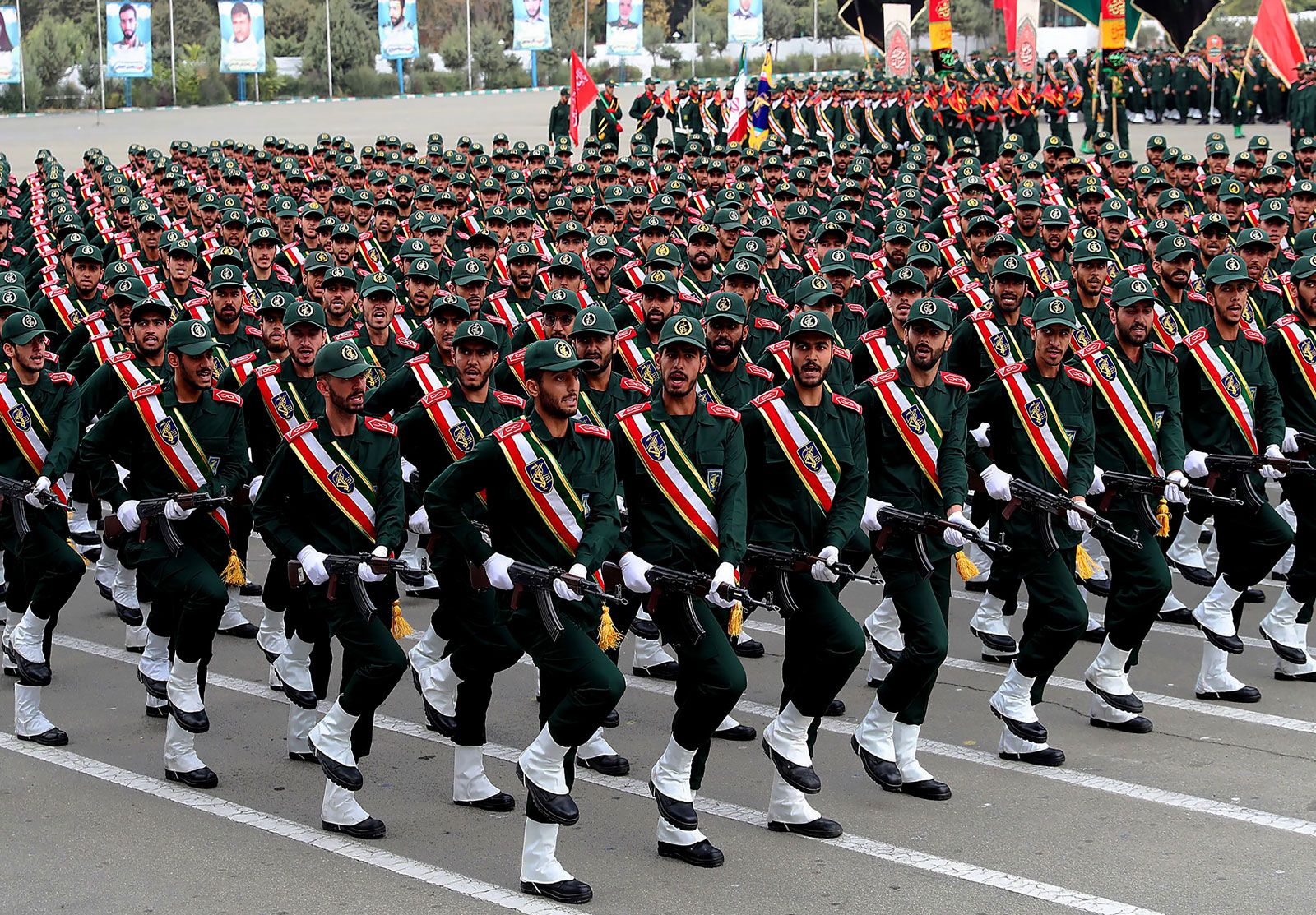

When Islamic Revolutionary Guard Corps (IRGC) was created in 1979 by Ruhollah Khomeini, its mission appeared simple: protect the revolution. It was designed as a counterweight to the conventional army, which the new regime did not fully trust after the fall of the Shah.
Four decades later, that force has evolved into something far more consequential. The IRGC is no longer just a military institution—it is a vast economic and political system embedded across Iran’s state structure. In the context of the ongoing Iran war and escalating sanctions, its trajectory offers a striking case study: how sustained external pressure can produce not collapse, but consolidation.
This is not merely a story of survival. It is a story of transformation under constraint.
From Revolutionary Guard to Economic Power Centre
The early years of the IRGC were defined by conflict, particularly the Iran–Iraq War. But the turning point came after 1988, when reconstruction created opportunities for institutional expansion.
The IRGC moved decisively into the economic sphere, positioning itself as a key contractor in rebuilding national infrastructure. Its engineering arm, widely known as Khatam al-Anbiya, became one of the largest construction entities in the country.
Over time, this role expanded beyond post-war rebuilding. The IRGC entered sectors critical to national development—energy, transport, telecommunications and heavy industry. What began as participation gradually became dominance.
This expansion was not entirely informal. Policy shifts in the early 2000s enabled quasi-state entities, including IRGC-linked organisations, to acquire stakes in major industries. The result was a hybrid structure: a military institution operating through legally sanctioned economic channels.
The Logic of Embedded Power
Unlike traditional military-industrial complexes, the IRGC’s influence is deeply embedded in Iran’s economic architecture. It is not simply a contractor or stakeholder—it is integrated into the infrastructure itself.
Its footprint spans oil and gas pipelines, transport networks, ports and telecommunications. One of the most notable transactions came in 2009, when IRGC-linked entities acquired a controlling stake in Iran’s national telecommunications company.
This matters for a simple reason: infrastructure is difficult to isolate. Sanctions can target individuals, firms or sectors, but they struggle to dismantle systems that underpin the functioning of an entire economy.
By positioning itself within these systems, the IRGC reduced its exposure to external pressure. It became less a targetable entity and more a structural component of the state.
Sanctions as a Catalyst, Not a Constraint
Western sanctions against Iran—particularly those led by the United States—have been extensive, targeting oil exports, financial institutions and key industries. The assumption underpinning these measures has been that economic pressure would weaken state capacity and force policy change.
In practice, sanctions have had a more complex effect.
By restricting access to global markets and financial systems, sanctions weakened Iran’s private sector and reduced competition. This created space for entities with state backing and alternative networks—most notably the IRGC—to expand.
As conventional channels closed, the IRGC adapted. It developed parallel systems for trade and finance, including alternative shipping arrangements and non-traditional payment mechanisms. These networks allowed Iran to continue exporting oil and accessing revenue streams, albeit under more constrained conditions.
In effect, sanctions reshaped the economic landscape in ways that favoured actors capable of operating outside formal systems.
The Rise of Parallel Financial Networks
One of the most significant developments has been the emergence of parallel financial structures. Exclusion from the global banking system forced Iran to explore alternative mechanisms for moving capital.
IRGC-linked networks have reportedly relied on a mix of intermediaries, regional partnerships and non-standard payment systems to facilitate trade. In recent years, digital assets and informal transfer systems have added further layers of flexibility.
These arrangements are not without cost—they often involve discounts, inefficiencies and increased risk. But they have proven resilient. Crucially, they reduce dependence on institutions that sanctions are designed to influence.
This capacity to operate in parallel has become a defining feature of the IRGC’s economic model.
Political Power Through Economic Control
Economic expansion has translated into political influence. The IRGC’s role in key sectors gives it leverage over decision-making processes within the state.
This dynamic became particularly visible following the death of Ali Khamenei in 2026. Reports indicated that the IRGC played a decisive role in shaping the formation of the new government, effectively setting boundaries on cabinet appointments.
Such influence does not stem solely from military strength. It reflects control over resources—financial, industrial and logistical—that are essential to governance.
In this sense, the IRGC operates as more than a military or economic actor. It functions as a power broker within the state, capable of shaping outcomes across multiple domains.
A State Within a State?
Analysts have often described the IRGC as a “state within a state.” While this captures part of the reality, it may understate the extent of integration.
The IRGC is not separate from the Iranian state—it is intertwined with it. Its economic activities support national infrastructure and security objectives, even as they reinforce its own institutional power.
This dual role creates a complex relationship. On one hand, the IRGC contributes to state resilience, particularly under external pressure. On the other, its dominance can crowd out private enterprise and limit economic diversification.
The result is a system where efficiency and competition are often secondary to control and stability.
The Strategic Implications of the Iran War
The ongoing Iran war has reinforced the centrality of the IRGC. As tensions escalate and conventional economic channels remain constrained, the organisation’s parallel networks and integrated infrastructure become even more critical.
Military operations, logistics and supply chains increasingly depend on capabilities that the IRGC controls or influences. This further consolidates its position within the national security framework.
At the same time, the war environment amplifies risks. Prolonged conflict places additional strain on resources and increases exposure to targeted actions. The very visibility that comes with centrality can also create vulnerabilities.
Lessons for Global Strategy
The IRGC’s evolution offers broader insights into the limits of sanctions as a policy tool.
First, sanctions can produce unintended consequences by strengthening actors that are best positioned to adapt. In Iran’s case, this has meant the expansion of a hybrid military-economic institution.
Second, control over physical and digital infrastructure provides a form of resilience that is difficult to undermine. Assets that are essential to national functioning are inherently harder to isolate.
Third, parallel systems—whether in finance, logistics or technology—can reduce the effectiveness of external pressure over time.
These dynamics are not unique to Iran. They are increasingly relevant in a global environment where economic statecraft is a primary instrument of competition.
Conclusion: Power Redefined
The story of the Islamic Revolutionary Guard Corps is not one of simple defiance or resilience. It is a case study in how institutions adapt to sustained pressure by reshaping the systems around them.
From its origins as a revolutionary force, the IRGC has become a central pillar of Iran’s economic and political structure. Sanctions, rather than dismantling this power, have in many ways reinforced it.
For DWA readers, the key takeaway is not to romanticise this trajectory, but to understand it. The Iran case highlights a critical shift in how power operates in the modern world—less about formal authority, more about control over assets, systems and networks.
In the end, the IRGC’s rise underscores a simple but consequential reality: in an era of economic warfare, resilience belongs not just to those who resist pressure, but to those who can redesign the environment in which that pressure is applied.
Majemite Jaboro writes for DWA and Businessday NG


Leave a Reply